
 admin
admin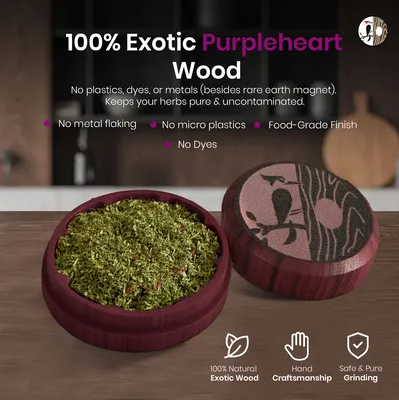
Typing “weed grinder near me” into search usually means one thing: you want a grinder without turning the purchase into a research project.
Maybe your old grinder stopped turning smoothly. Perhaps you left it somewhere. Or you simply want a better one today.
Local smoke shops and dispensaries can be convenient, and current local-search content specifically positions nearby dispensaries as places where shoppers may find basic grinder options quickly.
Convenience is valuable.
But it should not be the only thing deciding what ends up in your hand for the next several years.
Before buying the first grinder sitting behind the nearest counter, check these seven things.
1. Look at the material first
Ask what the grinder is actually made from.
Not what color it is.
Not whether the finish looks metallic.
The actual material.
Common choices include aluminum, stainless steel, zinc alloys, acrylic and wood. Current grinder guides continue to treat construction material as one of the major differences between products.
You will notice the difference every time you pick it up.
Metal offers an industrial feel. Plastic is typically lighter. Solid hardwood feels warmer and more natural.
If you are spending more than the minimum, material should be one of the reasons why.
2. Decide whether you really need four pieces
Multi-piece grinders dominate smoke-shop displays because their additional chambers are easy to market.
But stop and think about whether you use them.
A four-piece grinder usually means more threads, more separate sections and more places where residue can collect.
A two-piece grinder strips the idea back to the main function.
Woodie uses this minimalist approach with a compact two-piece construction. Its grinders are designed around the grinding action itself rather than adding multiple chambers.
If simplicity matters to you, fewer parts can actually be a feature.
3. Twist it if the store allows you to
A grinder can look impressive and still feel terrible.
If you are shopping locally and a display model is available, check the movement.
Does the top rotate comfortably?
Can you grip the sides easily?
Does the lid feel secure?
Does anything feel loose before the grinder has even been used?
This is one area where local shopping has an advantage. You can physically handle the product.
Use that opportunity.
Do not judge only by the box.
4. Look closely at the grinding teeth
Open the grinder.
Cheap teeth can reveal more about construction quality than an elaborate exterior.
Look at their spacing and shape. Check whether they appear cleanly formed. Notice whether there are awkward corners where material is likely to become trapped.
This is also where wooden grinders become interesting.
A true wooden weed grinder is different from a product with wood used only as exterior decoration. Woodie’s grinders use diamond-shaped grinding teeth carved into the solid hardwood itself.
The distinction is worth checking before buying anything marketed as “wood.”
5. Ask yourself where the grinder will live
A strange question?
Not really.
Cannabis accessories are increasingly being designed as lifestyle and home objects rather than purely utilitarian equipment. Design publications have highlighted brands creating accessories intended to sit comfortably alongside normal interior objects instead of always being hidden away.
So where will yours live?
A drawer?
A travel pouch?
A desk?
A shelf?
A coffee table?
If the grinder will remain visible, appearance suddenly matters more.
This is one reason exotic hardwood is appealing. Natural grain has enough visual character that the object can look closer to a piece of woodworking than generic smoking hardware.
6. Check what comes with it
The cheapest purchase is not always the best value.
Look at what is included.
Is there anything for storage? Anything for routine cleaning?
For example, Woodie includes a carrying pouch and cleaning tool with its compact grinders.
These are small additions, but they solve real problems.
A pouch helps protect a finished wooden surface when it is carried in a bag. A small brush reaches into areas where fingers will not.
Practical extras are more useful than decorative packaging you throw away.
7. Do not let “near me” limit the comparison
This is the most important point.
A local search should help you discover options. It should not force you into buying whichever three grinders happen to be sitting within five miles.
Twenty years ago, that limitation made sense.
Today it does not.
Compare the local options with specialist manufacturers online. You may discover different construction methods, materials and designs that a general smoke shop simply does not stock.
Woodie’s current collection, for example, includes grinders produced from distinct exotic hardwoods, including Canary wood for Tigers Eye, Bloodwood for Jasper and Purpleheart for Amethyst.
That level of material choice is far less common than choosing between black, silver and another anodized color.
Local convenience versus long-term ownership
There is nothing wrong with buying locally.
If you need a basic grinder immediately, a nearby store might be exactly the right answer.
But if you are replacing something you use regularly, give yourself another ten minutes before checking out.
Compare materials.
Look at construction.
Think about cleaning.
Decide whether you need all those chambers.
Consider whether you want something purely functional or something you will actually enjoy owning.
The search for a weed grinder near me may begin because of convenience, but the better purchase comes from knowing what you value.
A grinder is a small object, yet it is handled again and again.
That makes the details matter.
Sometimes the grinder worth owning is not the one located closest to you.
It is the one you will not feel the need to replace next year.