 admin
admin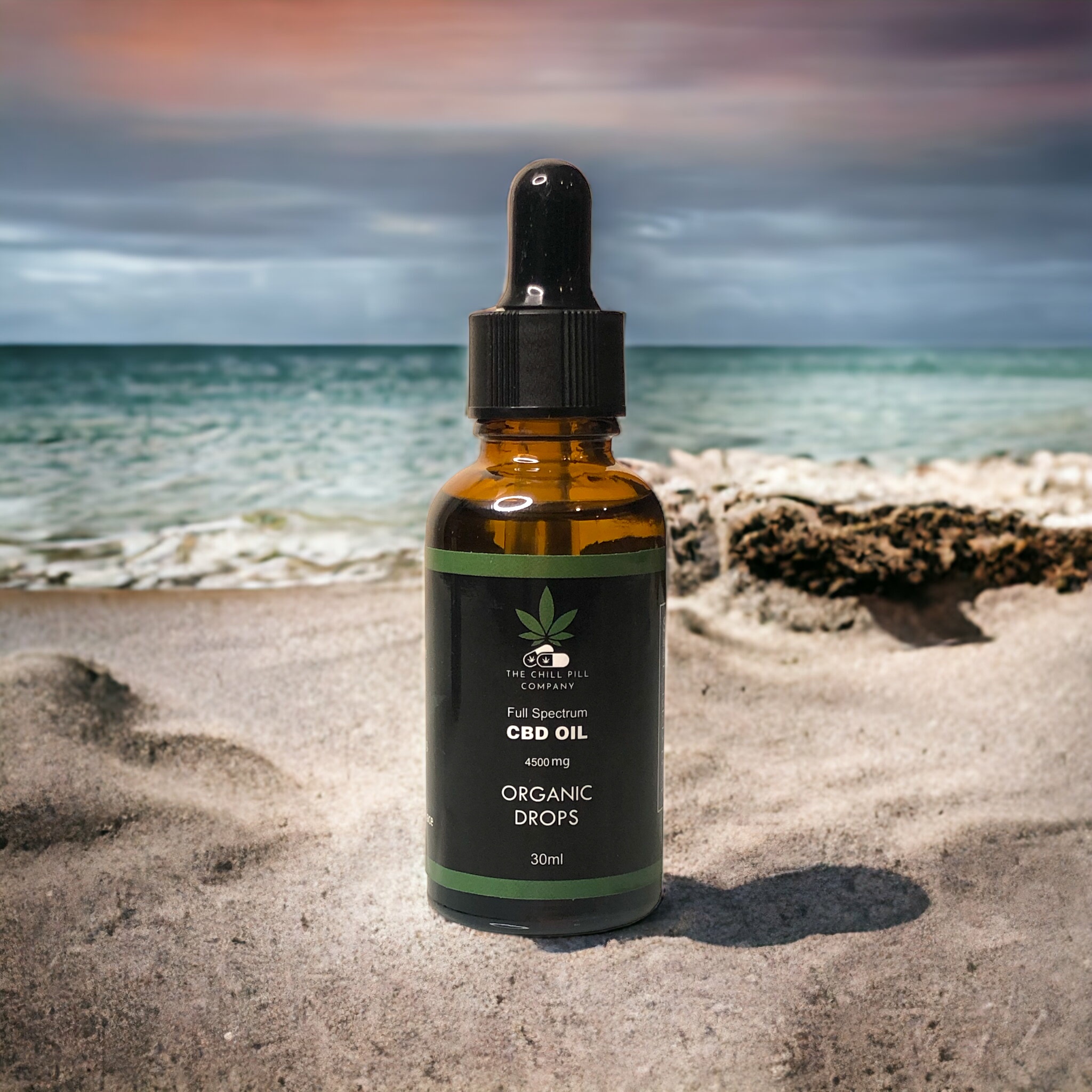
CBD oil and hemp seed oil are frequently confused, particularly because both can come from the same plant species, Cannabis sativa. Their similar names and botanical origins can make it difficult to understand what each product actually contains.
Despite the shared origin, CBD oil and hemp seed oil are different products. They are made using different plant materials, contain different compounds and are subject to different regulatory requirements in Australia.
Consumers researching CBD Oil Australia may encounter products labelled hemp oil, hemp extract, CBD isolate or cold-pressed hemp seed oil. These terms are not interchangeable, and confusing them can lead to unrealistic expectations about cannabinoid content and product characteristics.
This guide explains the differences between CBD oil and hemp seed oil, why certain CBD formulations contain hemp seed oil, how to understand ingredient labels and what Australian consumers should know about legal access in 2026.
CBD Oil vs Hemp Seed Oil: The Key Difference
The most important distinction is simple: CBD oil contains cannabidiol, while ordinary hemp seed oil is primarily a nutritional fatty oil and naturally contains no meaningful amount of CBD.
CBD is a cannabinoid obtained from cannabis plant material, typically the flowers and other cannabinoid-containing parts of the plant. It is then processed and incorporated into a finished formulation.
Hemp seed oil is produced by pressing hemp seeds. It contains fatty acids and other naturally occurring seed constituents, rather than a significant concentration of cannabinoids.
The Australian Office of Drug Control specifically distinguishes hemp seed oil from hemp oil containing cannabis extracts.
Quick Comparison: CBD Oil vs Hemp Seed Oil
| Feature | CBD Oil | Hemp Seed Oil |
| Primary source | Cannabinoid-containing cannabis extracts or purified CBD | Hemp seeds |
| Main component | CBD in a formulated product | Fatty acids and other seed constituents |
| CBD content | Intentionally added or concentrated | Normally absent except possible trace amounts |
| THC content | Depends on extract and formulation | Normally absent or restricted to traces |
| Common format | Measured liquid preparation | Food oil, cosmetic ingredient or carrier oil |
| Typical label | CBD amount in mg or mg/mL | Hemp seed oil and nutritional composition |
| Australian regulation | Medicinal CBD is regulated as a therapeutic good | Compliant hemp seed oil can be sold as food |
Both products may be derived from the same plant species, but that does not mean they have the same chemical composition or regulatory classification.
- What Is CBD Oil and How Is It Made?
CBD oil is a liquid formulation containing cannabidiol, a naturally occurring cannabinoid found in the cannabis plant.
Manufacturing typically involves obtaining a cannabinoid-rich extract or purified CBD ingredient and combining it with a suitable carrier oil.
A finished CBD oil may use MCT oil, olive oil or hemp seed oil as its carrier, depending on the manufacturer’s formulation.
Understanding CBD Oil Ingredients
A product label might identify two basic ingredients:
- CBD isolate or another CBD-containing extract.
- Hemp seed oil used as the carrier.
In this case, the hemp seed oil provides the liquid base, while the CBD ingredient is responsible for the stated cannabinoid concentration.
This distinction is particularly useful because seeing “hemp seed oil” in a CBD product’s ingredient list does not mean the product is merely ordinary hemp seed oil.
Similarly, a bottle of plain hemp seed oil does not become a CBD product simply because it is derived from the hemp plant.
Why CBD Oil Strengths Differ
CBD oils are commonly described internationally using total CBD content, such as 1,500mg, 4,500mg or 5,000mg.
However, the number on the label must be considered alongside the volume of the bottle.
Illustrative concentration example
Bottle A contains 1,500mg of CBD in 30mL of oil.
1,500 ÷ 30 = 50mg CBD per mL.
Bottle B contains 4,500mg of CBD in 30mL of oil.
4,500 ÷ 30 = 150mg CBD per mL.
Bottle B has three times the CBD concentration. This calculation does not indicate which product is medically appropriate or how much should be used.
Any medicinal formulation should be assessed according to its actual composition, quality and the advice of an appropriately qualified healthcare professional.
- What Is Hemp Seed Oil?
Hemp seed oil is obtained by mechanically pressing the seeds of low-THC hemp plants.
It is valued primarily for its nutritional composition and its use in food, skincare and personal-care formulations.
Hemp seeds contain polyunsaturated fatty acids, including omega-3 and omega-6 fatty acids. The oil can therefore be used as an ingredient in certain food products.
Unlike CBD oil, ordinary hemp seed oil is not manufactured to deliver a significant quantity of cannabidiol.
What Nutrients Does Hemp Seed Oil Contain?
Hemp seed oil naturally contains various fatty acids, including linoleic acid and alpha-linolenic acid. Its exact composition depends on the seeds, processing conditions and finished product.
It may also contain naturally occurring minor constituents such as tocopherols.
However, hemp seed oil should not be confused with whole hemp seeds. Pressed oil does not provide the same protein or fibre content as the original seeds.
Does Hemp Seed Oil Naturally Contain CBD?
Properly processed hemp seed oil generally contains no meaningful concentration of CBD.
Small traces of cannabinoids may be present, for example when residual plant material contaminates seeds during harvesting or processing.
The Office of Drug Control explains that a product labelled as hemp seed oil but containing substantial cannabinoids may be mislabelled or blended with a cannabinoid extract.
Therefore, consumers should not assume that hemp seed oil provides the same cannabinoid content as CBD oil.
- Can Hemp Seed Oil Be Used as a Carrier in CBD Oil?
Yes. This is one of the reasons the two ingredients are frequently confused.
A CBD formulation may combine purified cannabidiol with hemp seed oil to create a liquid preparation.
The carrier oil helps distribute the CBD throughout the formulation.
The finished product is no longer equivalent to ordinary hemp seed oil because it contains intentionally added cannabidiol.
How to Read a Two-Ingredient Label
Example A: Plain hemp seed oil
- Ingredients: Cold-pressed hemp seed oil.
- No intentionally added CBD.
- Label focuses on nutritional oil content.
Example B: CBD isolate in hemp seed oil
- Ingredients: CBD isolate, hemp seed oil.
- CBD content stated in milligrams.
- Hemp seed oil functions as a carrier ingredient.
These are illustrative label-reading examples, not independent verification of any particular commercial product.
The key lesson is to examine the complete ingredient declaration, rather than relying on the product name alone.
- Full Spectrum, Broad Spectrum and CBD Isolate Explained
CBD oil formulations are commonly divided into three categories according to their cannabinoid composition.
Understanding these categories helps explain why products derived from hemp may have different chemical profiles.
Full Spectrum CBD Oil
Full Spectrum CBD Oil typically contains cannabidiol together with other naturally occurring cannabis compounds.
These may include additional cannabinoids, terpenes and measurable quantities of THC.
The precise composition depends on the plant material, extraction process and final formulation.
Some marketing materials associate full-spectrum products with the proposed entourage effect. However, this does not establish that every full-spectrum product is clinically superior to purified CBD.
Importantly, international descriptions such as “less than 0.3% THC” should not be interpreted as proof of legal compliance in Australia.
Broad Spectrum CBD Oil
Broad-spectrum formulations generally retain CBD and certain additional cannabis compounds while undergoing processing intended to remove or reduce THC.
A broad-spectrum label does not automatically guarantee that laboratory testing will identify absolutely no THC.
The actual cannabinoid profile should be supported by suitable testing.
CBD Isolate
Interest in CBD Isolate Australia often involves questions about purity, cannabinoid composition and THC content.
CBD isolate is purified cannabidiol intended to contain CBD without the other naturally occurring cannabinoids and terpenes found in broader extracts.
It can be incorporated into carrier oils, including hemp seed oil, to produce a liquid formulation.
Purification does not eliminate the need for finished-product testing or appropriate regulatory oversight.
CBD Extract Comparison
| Property | Full Spectrum | Broad Spectrum | CBD Isolate |
| CBD present | Yes | Yes | Yes |
| Other cannabinoids | Generally present | May be present | Not intended |
| THC | May be present | Typically reduced or removed | Not intended |
| Terpenes | May be present | May be present | Normally absent |
| Carrier oil required? | Depends on finished formulation | Depends on finished formulation | Depends on finished formulation |
These categories describe formulation differences. They do not establish therapeutic effectiveness or Australian legal approval.
- Is Hemp Seed Oil the Same as THC-Free CBD Oil?
No. This is an important distinction.
Ordinary hemp seed oil is not intended to contain a meaningful concentration of CBD.
A product described as THC Free CBD Oil is intended to contain cannabidiol without detectable or specified levels of THC, depending on the manufacturer’s claim.
The two products therefore differ in their intended active ingredients.
What Does THC-Free Mean?
The meaning of THC-free depends on the supporting laboratory analysis and the standards applied.
A laboratory certificate may describe THC as:
- Not detected.
- Below the analytical detection limit.
- Below the quantification limit.
- Present at a measurable concentration.
These findings do not all mean the same thing.
For example, “not detected” means the testing method did not identify THC above the method’s specified detection limit.
It does not necessarily establish the complete absence of THC molecules.
Can Hemp Seed Oil or CBD Affect Drug Testing?
Compliant hemp seed oil ordinarily contains only trace cannabinoids, but product contamination or mislabelling can create uncertainty.
CBD preparations may also contain THC, whether intentionally or through manufacturing issues.
Neither a hemp label nor a THC-free marketing claim can guarantee a particular drug-testing outcome.
Driving and workplace testing requirements should be considered separately from general ingredient descriptions.
- How to Identify CBD Oil and Hemp Seed Oil on Labels
Ingredient lists and concentration statements can reveal significant differences between products that use similar packaging.
When researching CBD Products, consumers should distinguish between ingredient identity, total product volume and actual cannabinoid content.
Check the Source Ingredient
A label listing only Cannabis sativa seed oil typically refers to hemp seed oil.
A formulation listing cannabidiol, CBD isolate or another CBD extract identifies a different type of ingredient.
Look for Milligram Information
CBD products commonly identify cannabinoid concentration in milligrams.
A label may state total CBD content, CBD concentration per millilitre or CBD content per individual unit.
A plain hemp seed oil bottle is more likely to emphasise nutritional information, fatty acids and total oil volume.
Understand Product Names
The term “hemp oil” can be ambiguous.
It may be used informally to describe hemp seed oil, or it may refer to cannabis extracts containing cannabinoids.
The Office of Drug Control specifically warns that hemp oil and hemp seed oil should not be confused.
Check for a Certificate of Analysis
A certificate of analysis, or COA, is a laboratory report that may provide measured cannabinoid concentrations and other product-specific results.
Useful information includes:
- Product identification and batch number.
- Date of testing.
- Name of the laboratory.
- Measured CBD concentration.
- Measured THC concentration.
- Relevant analytical detection limits.
- Contaminant testing where applicable.
A report should match the product and batch being evaluated. General marketing claims cannot substitute for appropriate evidence.
- What About CBD Gummies and Other Hemp Products?
Not every hemp-derived product is an oil. International markets also feature CBD gummies, topical preparations and other formulations.
Searches for CBD Gummies Australia often reflect interest in comparing different forms of cannabidiol.
However, the distinction between hemp seed ingredients and added CBD remains relevant regardless of product format.
For example, a food containing hemp seeds is not automatically a CBD product.
Similarly, a gummy or balm described as containing cannabidiol should be evaluated according to its actual cannabinoid content, ingredient composition and legal classification.
CBD Oil, Hemp Seed Oil and Hemp Foods
| Product Type | Main Distinction |
| Hemp seed oil | Seed-derived fatty oil without meaningful added CBD |
| CBD oil | Liquid formulation containing cannabidiol |
| Hemp seeds | Food containing protein, fats and fibre |
| CBD gummies | Edible formulation with intentionally added CBD |
| CBD topical | Topical formulation containing CBD |
The product format alone does not determine whether something can legally be supplied or advertised in Australia.
- CBD Oil vs Hemp Seed Oil: Australian Legal Rules in 2026
The legal difference between hemp seed oil and medicinal CBD is particularly important for Australian consumers.
Research into CBD Australia frequently raises questions about food products, prescriptions, pharmacies and online retailers.
Australia has separate frameworks for compliant hemp seed foods and medicinal cannabis products.
Are Hemp Seed Foods Legal in Australia?
Food Standards Australia New Zealand permitted low-THC hemp seed foods under changes that came into effect in 2017.
This allows compliant hemp seeds and certain seed-derived food products, including hemp seed oil, to be sold subject to relevant food standards and other applicable laws.
The permission does not extend to adding cannabinoid-rich cannabis extracts to ordinary foods.
Hemp seed oil must also satisfy the relevant limits on residual cannabinoids.
For more information, see Food Standards Australia New Zealand’s guidance on hemp seeds as food.
Is Medicinal CBD Legal in Australia?
Medicinal CBD can be legally supplied through appropriate regulated pathways.
Depending on the product and individual circumstances, these pathways can involve registered medicines, prescriptions and special access arrangements.
Certain low-dose CBD preparations were moved into a Schedule 3 pharmacist-only framework in 2021.
However, the framework only permits pharmacy supply of CBD products that meet the relevant conditions and receive TGA approval. It does not authorise unrestricted retail sales.
Consumers should verify the current approval status of any product and obtain advice from an appropriately qualified healthcare professional.
Can Australians Order CBD from Any Online Store?
No. A website selling a product to Australian customers does not automatically establish that the product is lawfully supplied.
The search phrase Buy CBD Oil should not be interpreted as evidence that an advertised product can legally be purchased without the applicable medical authorisation.
Australian import requirements, therapeutic goods laws and state or territory rules may apply.
Consumers should not assume that a product permitted for retail sale overseas can be imported into Australia under the same conditions.
The Office of Drug Control’s hemp import guidance explains these distinctions and the thresholds applicable to certain seed-derived products.
- Common Mistakes When Comparing CBD and Hemp Seed Oil
Mistake 1: Assuming All Hemp Oils Contain CBD
Hemp seed oil naturally contains no meaningful CBD concentration.
A product requires intentionally added or concentrated cannabidiol to function as a CBD-containing formulation.
Mistake 2: Confusing Bottle Size With CBD Strength
A large bottle may contain less concentrated CBD than a smaller bottle.
Total milligrams and the amount per millilitre are more informative than bottle volume alone.
Mistake 3: Assuming Hemp-Derived Means THC-Free
CBD extracts obtained from hemp may still contain THC or other cannabinoids.
The precise composition depends on extraction, purification and manufacturing controls.
Mistake 4: Treating Laboratory Claims as Proof of Approval
Third-party testing can help document a product’s chemical composition.
However, testing alone does not establish TGA approval, lawful availability or clinical effectiveness.
Mistake 5: Assuming Overseas CBD Laws Apply in Australia
Australian laws distinguish between food-grade hemp seed products and medicinal cannabinoid preparations.
Retail practices permitted in other countries may not be permitted under Australian law.
- Frequently Asked Questions
Is Hemp Seed Oil the Same as CBD Oil?
No. Hemp seed oil is made from hemp seeds and primarily contains fatty acids. CBD oil contains intentionally added or extracted cannabidiol. The two products differ in composition and regulatory treatment.
Does Hemp Seed Oil Contain Cannabidiol?
Properly processed hemp seed oil does not contain meaningful amounts of CBD. Trace cannabinoids may occur because of residual plant material or contamination.
Why Is Hemp Seed Oil Used in CBD Products?
Hemp seed oil can act as a carrier oil. Manufacturers may combine it with CBD isolate or another CBD-containing ingredient to produce a liquid formulation.
Is Hemp Seed Oil Legal in Australia?
Compliant low-THC hemp seed oil can be supplied as a food ingredient in Australia, subject to applicable food standards and other legal requirements.
Can Hemp Seed Oil Get You High?
Ordinary compliant hemp seed oil does not contain meaningful concentrations of intoxicating cannabinoids. It should not be confused with cannabis extracts that contain THC.
Does Hemp Seed Oil Have the Same Effects as CBD?
No equivalent effects should be assumed. Hemp seed oil is primarily a source of fatty acids, while CBD is a distinct cannabinoid studied for specific medical applications.
Can CBD Isolate Be Mixed With Hemp Seed Oil?
Yes. Hemp seed oil is one of several possible carrier oils used in CBD isolate formulations. The finished product’s CBD concentration depends on the amount of isolate incorporated.
Is Full-Spectrum CBD the Same as Hemp Seed Oil?
No. Full-spectrum CBD contains CBD along with other cannabis compounds. Hemp seed oil is produced from seeds and does not naturally contain meaningful concentrations of those cannabinoids.
Does a THC-Free Label Guarantee a Negative Drug Test?
No. Testing results depend on product composition, laboratory detection limits and other circumstances. A marketing claim alone cannot guarantee a negative drug test.
Can You Purchase CBD Oil Without a Prescription in Australia?
Australia has a framework for approved pharmacist-only low-dose CBD medicines. Whether a product can be supplied without a prescription depends on its current registration and scheduling status. This should be verified with the TGA or a registered healthcare professional.
Final Thoughts
CBD oil and hemp seed oil may share a botanical origin, but they are not interchangeable.
Hemp seed oil is primarily a seed-derived fatty oil used in food and other products. CBD oil is a formulation containing cannabidiol, which may be combined with hemp seed oil or another carrier.
Understanding this difference can help readers interpret ingredient lists, cannabinoid concentrations and product descriptions more accurately.
Full-spectrum, broad-spectrum and CBD isolate formulations also have different cannabinoid profiles, making independent testing and clear labelling especially important.
For Australians, regulatory status must be considered alongside product composition. Compliant hemp seed foods and medicinal CBD preparations operate under different legal requirements.
Before relying on any CBD product claim, consumers should consult authoritative Australian guidance and seek advice from a qualified healthcare professional.
References and Further Reading
- Australian Office of Drug Control: Importing Hemp Products into Australia
- Food Standards Australia New Zealand: Hemp Seeds as Food
- Therapeutic Goods Administration: Hemp Seed Oil Compositional Guideline
- Therapeutic Goods Administration: Over-the-Counter Access to Low-Dose CBD
- Therapeutic Goods Administration: Advertising Restrictions for Prescription Medicines